Buy jean-lucdehaene.eu ?
We are moving the project
jean-lucdehaene.eu .
Are you interested in purchasing the domain
jean-lucdehaene.eu ?
domain@kv-gmbh.de · 0541-91531010
Buy jean-lucdehaene.eu ?
Is wage fairness fair?
Wage fairness is subjective and can vary depending on individual perspectives. Some may argue that wage fairness is fair because it ensures that employees are compensated based on their skills, experience, and contributions to the company. Others may argue that wage fairness is not fair because it can lead to disparities in pay between different employees, even if they perform similar roles. Ultimately, the concept of wage fairness is complex and can be influenced by various factors such as industry standards, market conditions, and company policies. **
What is more important: fairness or equality?
Both fairness and equality are important concepts, but they serve different purposes. Fairness focuses on ensuring that individuals are treated justly and impartially based on their unique circumstances, while equality aims to create a level playing field by providing everyone with the same opportunities and resources. In some situations, prioritizing fairness may be more important to address individual needs and circumstances, while in others, equality may be necessary to promote overall societal well-being and justice. Ultimately, finding a balance between fairness and equality is crucial in creating a just and equitable society. **


Similar search terms for For Fairness
Top-Angebote
Products related to For Fairness:
-
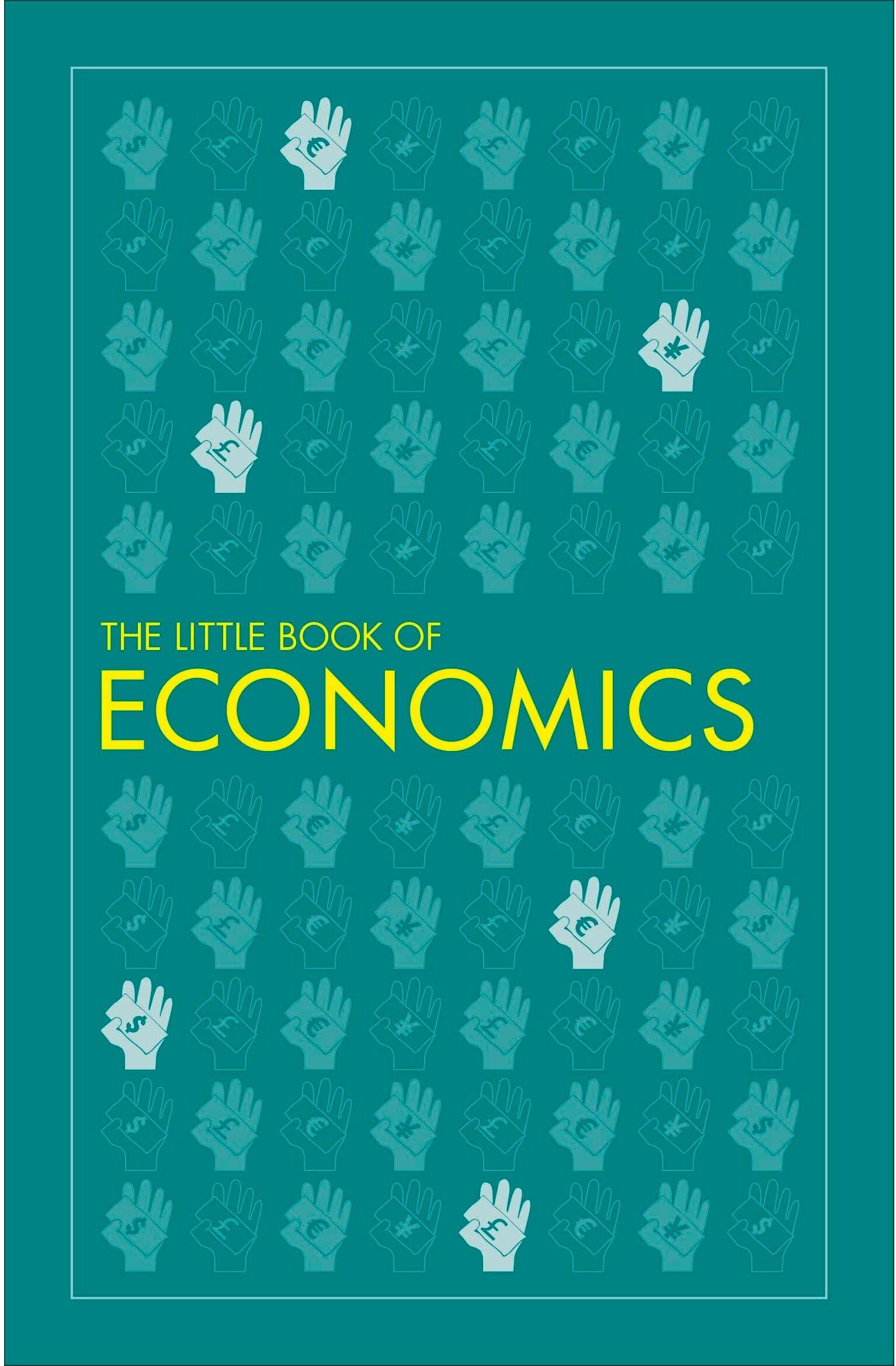
The Little Book of Economics (DK Big Ideas Series)This book is the perfect introduction to the subject of economics and economic ideas through history. From the earliest forms of currency to the Industrial Revolution, and from the birth of the stock market to free-market capitalism and globalized trade, The Little Book of Economics brings economic theory and the work of key economists to life. Journeying through centuries of economic thought, it is the perfect pocket-sized guide to the subject. Packed with infographics and flowcharts that explain complex concepts clearly and simply, The Little Book of Economics offers you a combination of clear text and hard-working infographics in a portable format that is perfect for reading on the go.5,99 £*Shipping: 2,99 £Secure redirect to the provider
-
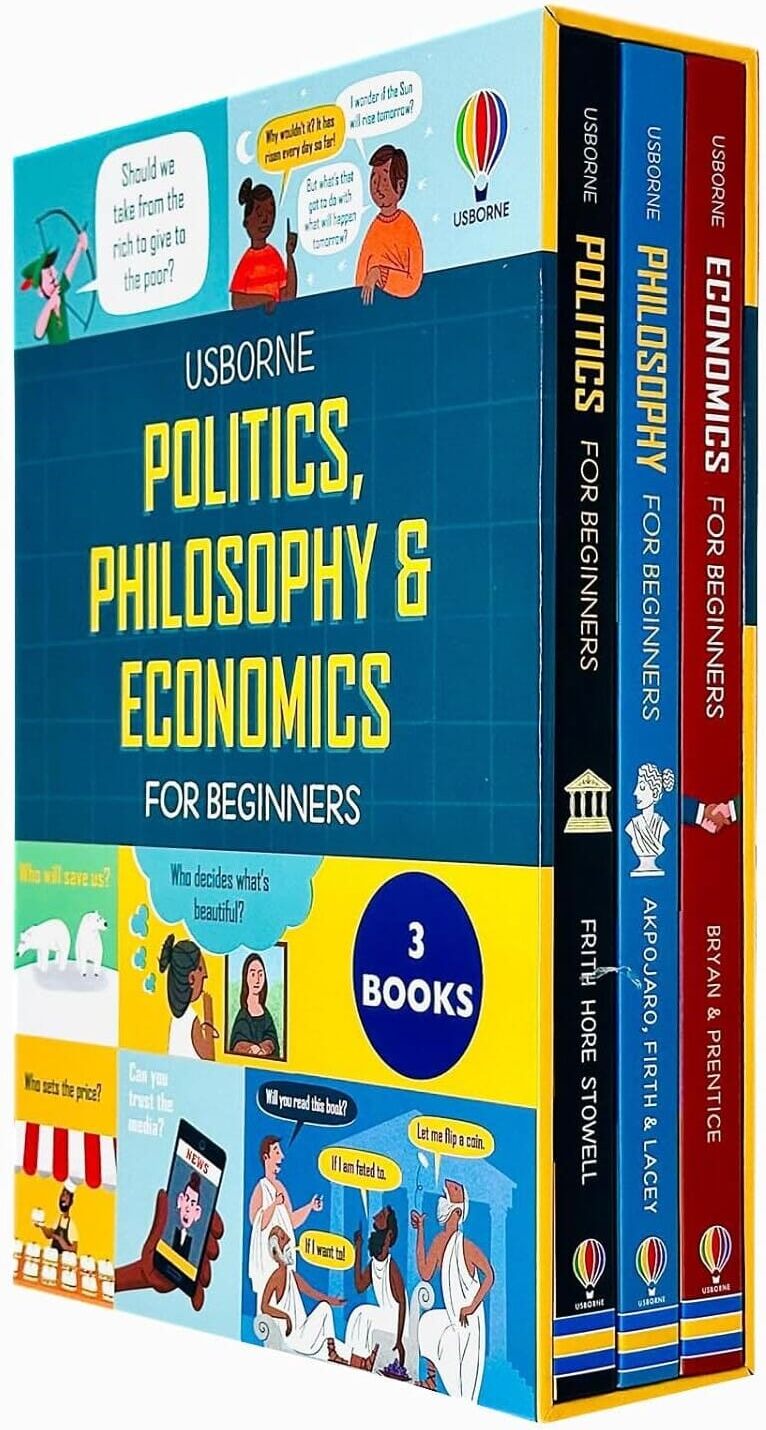
Usborne For Beginners Series: Politics, Philosophy and Economics 3 Books Collection Box Set - Ages 11+ - Hardback Usborne Publishing LtdTitles in this set: 1. Politics for Beginners 2. Philosophy for Beginners 3. Economics for Beginners Politics for Beginners An informative guide to political systems, elections, voting and government, and issues including feminism, human rights, freedom of speech and fake news, all explained with clear text and bright, infographic-style illustrations. Includes tips on how to argue and debate, a glossary, and links to specially selected websites with more information. Philosophy for Beginners Philosophy is a way of thinking about just about anything. It asks big questions, such as "how can I be good?" or "what makes something beautiful?" Using lively examples, humorous illustrations and simple thought experiments, this book opens up the world of philosophy to both children and adults and includes links to recommended websites with videos, games and activities to find out more. Economics for Beginners Nobody has everything they need, all the time - so how can we make do with what we have? Economics is all about understanding the choices we make to solve this problem. With bright, infographics pictures, this informative book describes why markets are so important, how businesses work out what to sell, and how governments choose how to run a country. Includes Usborne Quicklinks to specially selected websites for more information.14,95 £*Shipping: 2,99 £Secure redirect to the provider
-
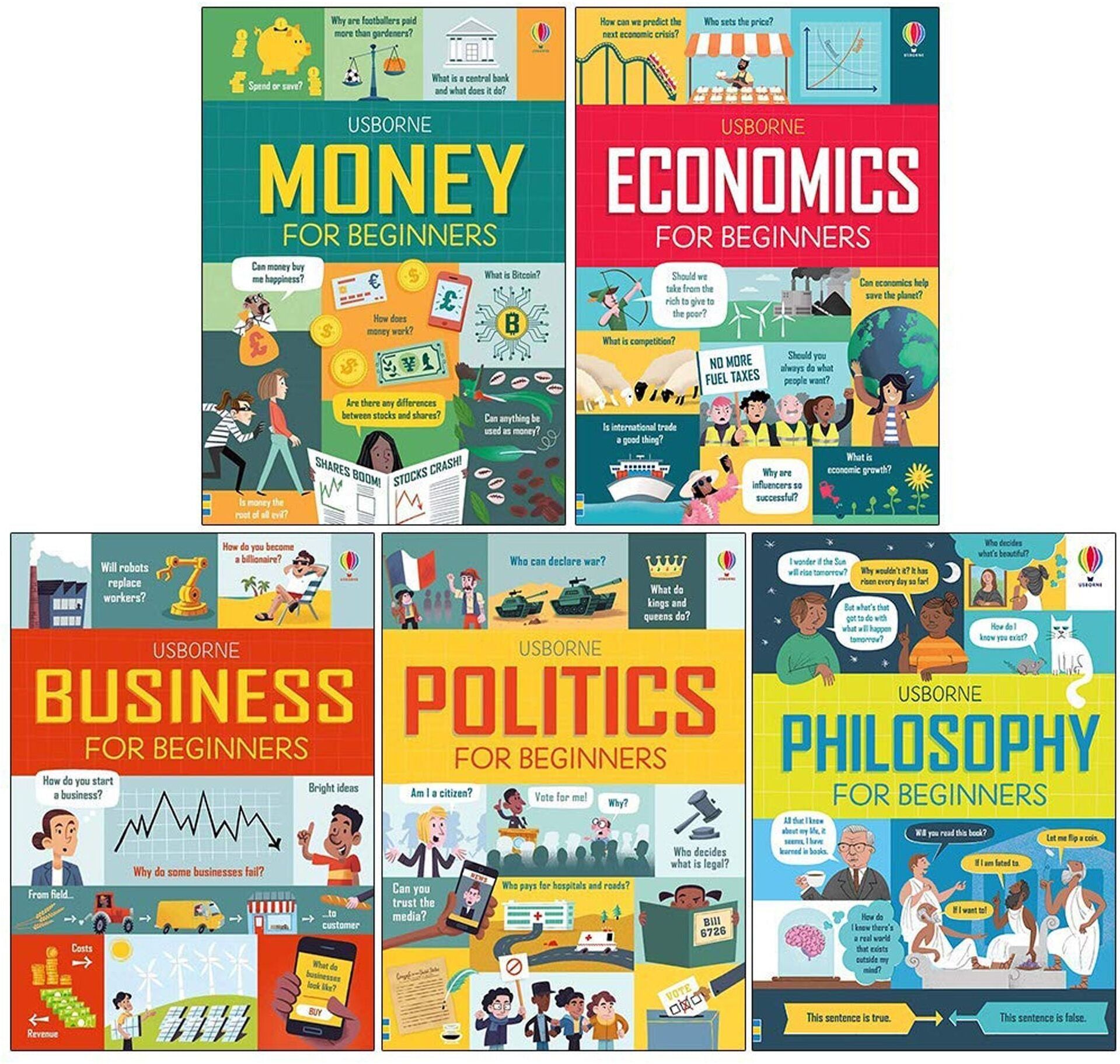
Usborne Big Subjects for Beginners 5 Books Collection Box Set Money, Economics, Business, Politics & Philosophy – Illustrated Educational Learning GHelp children understand the world around them with the Usborne Big Subjects for Beginners – 5 Books Collection Box Set, a beautifully illustrated introduction to some of the most important topics in modern life. Each book breaks down complex ideas into simple, engaging explanations perfect for kids, beginners, and curious young minds.Packed with colourful diagrams, friendly illustrations, quick facts, and clear examples, this set helps young readers explore big ideas with confidence. This educational collection includes: Money for Beginners – Understanding money, saving, spending, and how currency works. Economics for Beginners – Supply, demand, trade, markets, and how economies function. Business for Beginners – How businesses start, operate, grow, and succeed. Politics for Beginners – Governments, elections, laws, democracy, and world politics explained. Philosophy for Beginners – Big questions about life, knowledge, ethics, and thinking skills. Perfect for ages 9–14, home learning, school topics, and young readers who love discovering new knowledge. Related Tags: Usborne, Usbourne Books19,99 £*Shipping: 2,99 £Secure redirect to the provider
-
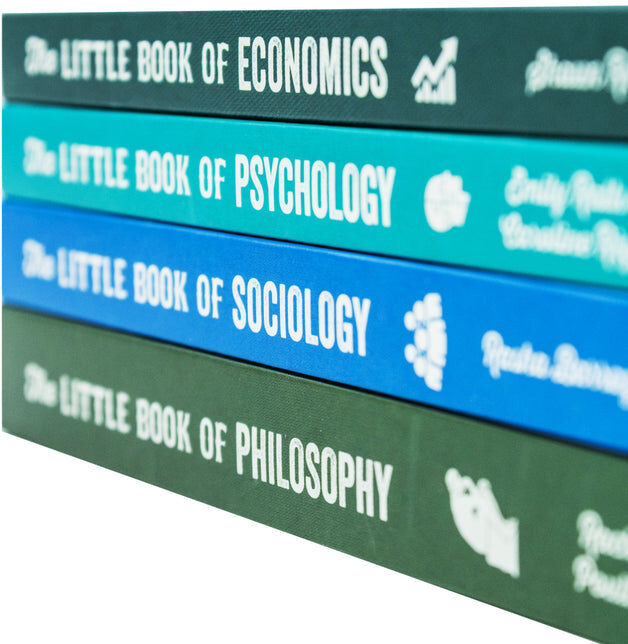
Summersdale Publishers The Little Book of Philosophy, Sociology, Economics & Psychology 4 Books Collection SetThe Little Book of Philosophy Philosophy is a quest for wisdom and knowledge; philosophia in Ancient Greek literally means “love of wisdom”. The aim of philosophy is to ask and explore life’s big questions to help us work out what we can know and how we can live a good life. Today, in a world of fake news, embarking on a quest for truth couldn’t be more important. The Little Book of Sociology From the smallest everyday interaction to the impact of vast systemic change, societies are brimming with fascinating phenomena we all want to understand more clearly.There's never been a more important moment to grasp what's going on around us, and this pocket-sized guide offers an engaging introduction to the key sociological concepts. The Little Book of Economics This Book will bring you up to speed on the basics of micro- and macroeconomics and demystify the world of taxes, trade, investments and finance, in simple English and with easy-to-follow examples.By the end of this crash course, you will have a grasp on all the essential terms, concepts and theories you need to know to understand modern-day. The Little Book of Psychology If you want to know your Freud from your Jung and your Milgram from your Maslow, strap in for this whirlwind tour of the highlights of psychology. Including accessible primers on: - The early thinkers who contributed to psychological ideas and the birth of modern psychology- Famous (and often controversial) experiments and their repercussions.12,99 £*Shipping: 2,99 £Secure redirect to the provider
-
What is more important: Fairness or equality?
Both fairness and equality are important concepts, but fairness may be more important in certain situations. Fairness ensures that individuals are treated justly and impartially based on their unique circumstances, while equality focuses on ensuring everyone has the same resources or opportunities. In some cases, prioritizing fairness may lead to greater overall equality by addressing individual needs and circumstances. Ultimately, a balance of both fairness and equality is necessary to create a just and equitable society. **
-
Should I do it out of fairness?
Yes, doing something out of fairness is important in maintaining a sense of justice and equality. If a decision or action is fair, it can help to build trust and respect among those involved. However, it's also important to consider the specific situation and the potential impact of your actions before making a decision solely based on fairness. Sometimes, other factors such as compassion, empathy, and practicality may also need to be taken into account. **
-
What is the difference between fairness and equality?
Fairness refers to the concept of justice and impartiality in treating individuals based on their unique circumstances and needs. It involves giving everyone what they need to be successful, which may not always be the same for everyone. On the other hand, equality focuses on treating everyone the same regardless of their individual differences. While equality aims to provide equal opportunities and resources to all, fairness recognizes that individuals may require different levels of support to achieve the same outcomes. **
-
Does video technology bring more fairness to football?
Video technology, such as VAR (Video Assistant Referee), has been implemented in football to help referees make more accurate decisions. While it aims to bring more fairness to the game by reducing human error, it has also sparked controversy and debate. Some argue that it has helped to correct clear mistakes and ensure fairness, while others believe it has led to more stoppages and disrupted the flow of the game. Ultimately, the impact of video technology on fairness in football is still a topic of ongoing discussion and evaluation. **

What does John Rawls mean by "Justice as Fairness"?
John Rawls' concept of "Justice as Fairness" refers to his theory of justice that seeks to ensure fairness and equality in society. According to Rawls, justice should be based on principles that would be chosen by individuals in a hypothetical original position, where they are unaware of their own characteristics and circumstances. This ensures that the principles of justice are fair and impartial, as they are chosen behind a "veil of ignorance." Rawls argues that this approach would lead to the establishment of a just society that prioritizes the well-being of the least advantaged members. **
What is the relationship between stochastic processes and fairness?
Stochastic processes are mathematical models that describe the evolution of random variables over time. Fairness, on the other hand, refers to the concept of treating all individuals or entities equally and without bias. The relationship between stochastic processes and fairness lies in the application of stochastic processes to model and analyze systems where fairness is a concern, such as in the allocation of resources, scheduling of tasks, or decision-making processes. By using stochastic processes, researchers and policymakers can better understand the impact of randomness and uncertainty on fairness, and develop strategies to ensure fair outcomes in these systems. **
Top-Angebote
Products related to For Fairness:
-
Banbo Tielemans Belgium Fully Articulated FigurineThe Tielemans Fully Articulated Figurine is a premium collectible designed with precision and authenticity. Measuring 20cm in height, this miniature figure reflects the highest standards of craftsmanship, offering full articulation for dynamic posing. Each figurine is presented in an official Belgium kit and includes a club-branded football, reinforcing its status as an officially licensed product. This collectible is a tribute to Youri Tielemans's legacy and is an essential item for serious football memorabilia collectors. - 20cm premium collectible figure - Full articulation for dynamic posing - Officially licensed, official kit - Includes club-branded football - Great gift for collectors and fans20,49 £*Shipping: 0,00 £Secure redirect to the provider
-
Banbo Sockers Jeremy Doku Belgium 20cm Fully Articulated FigurineThe Doku Fully Articulated Figurine is a premium collectible designed with precision and authenticity. Measuring 20cm in height, this miniature figure reflects the highest standards of craftsmanship, offering full articulation for dynamic posing. Each figurine is presented in an official Belgium kit and includes a club-branded football, reinforcing its status as an officially licensed product. This collectible is a tribute to Jeremy Doku's legacy and is an essential item for serious football memorabilia collectors. - 20cm premium collectible figure - Full articulation for dynamic posing - Officially licensed, official kit - Includes club-branded football - Great gift for collectors and fans20,49 £*Shipping: 0,00 £Secure redirect to the provider
-
The Little Book of Economics (DK Big Ideas Series)This book is the perfect introduction to the subject of economics and economic ideas through history. From the earliest forms of currency to the Industrial Revolution, and from the birth of the stock market to free-market capitalism and globalized trade, The Little Book of Economics brings economic theory and the work of key economists to life. Journeying through centuries of economic thought, it is the perfect pocket-sized guide to the subject. Packed with infographics and flowcharts that explain complex concepts clearly and simply, The Little Book of Economics offers you a combination of clear text and hard-working infographics in a portable format that is perfect for reading on the go.5,99 £*Shipping: 2,99 £Secure redirect to the provider
-
Usborne For Beginners Series: Politics, Philosophy and Economics 3 Books Collection Box Set - Ages 11+ - Hardback Usborne Publishing LtdTitles in this set: 1. Politics for Beginners 2. Philosophy for Beginners 3. Economics for Beginners Politics for Beginners An informative guide to political systems, elections, voting and government, and issues including feminism, human rights, freedom of speech and fake news, all explained with clear text and bright, infographic-style illustrations. Includes tips on how to argue and debate, a glossary, and links to specially selected websites with more information. Philosophy for Beginners Philosophy is a way of thinking about just about anything. It asks big questions, such as "how can I be good?" or "what makes something beautiful?" Using lively examples, humorous illustrations and simple thought experiments, this book opens up the world of philosophy to both children and adults and includes links to recommended websites with videos, games and activities to find out more. Economics for Beginners Nobody has everything they need, all the time - so how can we make do with what we have? Economics is all about understanding the choices we make to solve this problem. With bright, infographics pictures, this informative book describes why markets are so important, how businesses work out what to sell, and how governments choose how to run a country. Includes Usborne Quicklinks to specially selected websites for more information.14,95 £*Shipping: 2,99 £Secure redirect to the provider
-
Is wage fairness fair?
Wage fairness is subjective and can vary depending on individual perspectives. Some may argue that wage fairness is fair because it ensures that employees are compensated based on their skills, experience, and contributions to the company. Others may argue that wage fairness is not fair because it can lead to disparities in pay between different employees, even if they perform similar roles. Ultimately, the concept of wage fairness is complex and can be influenced by various factors such as industry standards, market conditions, and company policies. **
-
What is more important: fairness or equality?
Both fairness and equality are important concepts, but they serve different purposes. Fairness focuses on ensuring that individuals are treated justly and impartially based on their unique circumstances, while equality aims to create a level playing field by providing everyone with the same opportunities and resources. In some situations, prioritizing fairness may be more important to address individual needs and circumstances, while in others, equality may be necessary to promote overall societal well-being and justice. Ultimately, finding a balance between fairness and equality is crucial in creating a just and equitable society. **
-
What is more important: Fairness or equality?
Both fairness and equality are important concepts, but fairness may be more important in certain situations. Fairness ensures that individuals are treated justly and impartially based on their unique circumstances, while equality focuses on ensuring everyone has the same resources or opportunities. In some cases, prioritizing fairness may lead to greater overall equality by addressing individual needs and circumstances. Ultimately, a balance of both fairness and equality is necessary to create a just and equitable society. **
-
Should I do it out of fairness?
Yes, doing something out of fairness is important in maintaining a sense of justice and equality. If a decision or action is fair, it can help to build trust and respect among those involved. However, it's also important to consider the specific situation and the potential impact of your actions before making a decision solely based on fairness. Sometimes, other factors such as compassion, empathy, and practicality may also need to be taken into account. **
Similar search terms for For Fairness
-
Usborne Big Subjects for Beginners 5 Books Collection Box Set Money, Economics, Business, Politics & Philosophy – Illustrated Educational Learning GHelp children understand the world around them with the Usborne Big Subjects for Beginners – 5 Books Collection Box Set, a beautifully illustrated introduction to some of the most important topics in modern life. Each book breaks down complex ideas into simple, engaging explanations perfect for kids, beginners, and curious young minds.Packed with colourful diagrams, friendly illustrations, quick facts, and clear examples, this set helps young readers explore big ideas with confidence. This educational collection includes: Money for Beginners – Understanding money, saving, spending, and how currency works. Economics for Beginners – Supply, demand, trade, markets, and how economies function. Business for Beginners – How businesses start, operate, grow, and succeed. Politics for Beginners – Governments, elections, laws, democracy, and world politics explained. Philosophy for Beginners – Big questions about life, knowledge, ethics, and thinking skills. Perfect for ages 9–14, home learning, school topics, and young readers who love discovering new knowledge. Related Tags: Usborne, Usbourne Books19,99 £*Shipping: 2,99 £Secure redirect to the provider
-
Summersdale Publishers The Little Book of Philosophy, Sociology, Economics & Psychology 4 Books Collection SetThe Little Book of Philosophy Philosophy is a quest for wisdom and knowledge; philosophia in Ancient Greek literally means “love of wisdom”. The aim of philosophy is to ask and explore life’s big questions to help us work out what we can know and how we can live a good life. Today, in a world of fake news, embarking on a quest for truth couldn’t be more important. The Little Book of Sociology From the smallest everyday interaction to the impact of vast systemic change, societies are brimming with fascinating phenomena we all want to understand more clearly.There's never been a more important moment to grasp what's going on around us, and this pocket-sized guide offers an engaging introduction to the key sociological concepts. The Little Book of Economics This Book will bring you up to speed on the basics of micro- and macroeconomics and demystify the world of taxes, trade, investments and finance, in simple English and with easy-to-follow examples.By the end of this crash course, you will have a grasp on all the essential terms, concepts and theories you need to know to understand modern-day. The Little Book of Psychology If you want to know your Freud from your Jung and your Milgram from your Maslow, strap in for this whirlwind tour of the highlights of psychology. Including accessible primers on: - The early thinkers who contributed to psychological ideas and the birth of modern psychology- Famous (and often controversial) experiments and their repercussions.12,99 £*Shipping: 2,99 £Secure redirect to the provider
-
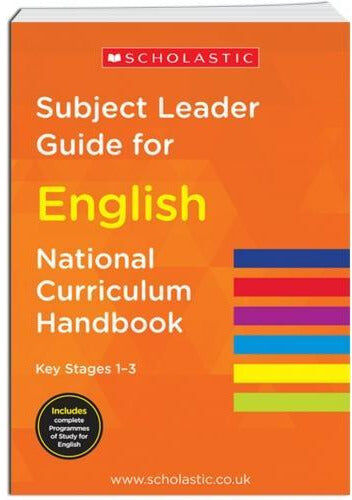
Scholastic National Curriculum Handbook Subject Leader Guide For English Key Stage 1-3National Curriculum Handbook Subject Leader Guide for English Key Stage 1-3 Description: Get ready for the biggest curriculum change in more than a decade! To help coordinators to deliver the new curriculum; Scholastic has published the first complete printed programme of study for key stages 1-3 in English. Each guide also provides a wealth of subject leader support including: an overview of the main changes to the curriculum; an overview of the subject leader's role at times of curriculum change; priority areas at each key stage; how to add creativity to the new curriculum; helpful subject leader's check-list. Scholastic; publisher of the best-selling 100 Lessons series; has partnered with Babcock Learning and Development Partnership (Devon Local Authority); one of the UK's leading school improvement services; to develop these essential subject guides.9,99 £*Shipping: 2,99 £Secure redirect to the provider
-
What is the difference between fairness and equality?
Fairness refers to the concept of justice and impartiality in treating individuals based on their unique circumstances and needs. It involves giving everyone what they need to be successful, which may not always be the same for everyone. On the other hand, equality focuses on treating everyone the same regardless of their individual differences. While equality aims to provide equal opportunities and resources to all, fairness recognizes that individuals may require different levels of support to achieve the same outcomes. **
-
Does video technology bring more fairness to football?
Video technology, such as VAR (Video Assistant Referee), has been implemented in football to help referees make more accurate decisions. While it aims to bring more fairness to the game by reducing human error, it has also sparked controversy and debate. Some argue that it has helped to correct clear mistakes and ensure fairness, while others believe it has led to more stoppages and disrupted the flow of the game. Ultimately, the impact of video technology on fairness in football is still a topic of ongoing discussion and evaluation. **
-
What does John Rawls mean by "Justice as Fairness"?
John Rawls' concept of "Justice as Fairness" refers to his theory of justice that seeks to ensure fairness and equality in society. According to Rawls, justice should be based on principles that would be chosen by individuals in a hypothetical original position, where they are unaware of their own characteristics and circumstances. This ensures that the principles of justice are fair and impartial, as they are chosen behind a "veil of ignorance." Rawls argues that this approach would lead to the establishment of a just society that prioritizes the well-being of the least advantaged members. **
-
What is the relationship between stochastic processes and fairness?
Stochastic processes are mathematical models that describe the evolution of random variables over time. Fairness, on the other hand, refers to the concept of treating all individuals or entities equally and without bias. The relationship between stochastic processes and fairness lies in the application of stochastic processes to model and analyze systems where fairness is a concern, such as in the allocation of resources, scheduling of tasks, or decision-making processes. By using stochastic processes, researchers and policymakers can better understand the impact of randomness and uncertainty on fairness, and develop strategies to ensure fair outcomes in these systems. **
* All prices are inclusive of VAT and, if applicable, plus shipping costs. The offer information is based on the details provided by the respective shop and is updated through automated processes. Real-time updates do not occur, so deviations can occur in individual cases. ** Note: Parts of this content were created by AI.